

Why Ferrari tri-coats demand in-house expertise
Ferraris are famous for their stunning paint finishes. When you look at one in the sunlight, the color has incredible depth, almost like you’re looking through liquid glass. That effect comes from a specialized paint system called a tri-coat.
Getting a tri-coat finish right isn’t easy. It takes years of experience, precise technique, and complete control over the repair process. Many body shops simply don’t have that expertise. Instead, they’ll repair the damaged panel, remove it from the vehicle, and send it to a separate paint shop.
Here’s the problem: exotic vehicle paintwork should never be treated as a separate job. The technicians responsible for repairing the car need to see the entire vehicle throughout the process. That level of control is what allows every panel, color transition, and finish to blend seamlessly from start to finish.
The secret behind Ferrari paint depth

Most vehicles use a relatively straightforward two-stage paint system consisting of a base color followed by a protective clear coat. Ferrari’s tri-coat paint finishes are much more sophisticated, using three carefully applied layers to create the rich depth and movement the brand is known for.
The role of the three layers
The first layer provides the vehicle’s base color. Next comes the most critical stage: a translucent mid-coat filled with microscopic metallic or pearl particles that create the color’s depth and brilliance. As light moves across the surface, this layer changes how the paint reflects, giving Ferrari finishes their unmistakable glow.
The final layer is the clear coat, which seals everything underneath while adding gloss and protection.
Every step has to be executed with precision. Apply too much of the mid-coat and the color becomes too dark. Apply too little and the base color shows through. Even the flash time between coats matters because each layer needs to cure correctly before the next one is applied.
Why standard shops fail at matching depth
The reality is that most collision centers spend their days repairing everyday commuter vehicles. Their workflow is built around efficiency and volume, not the meticulous process required for exotic paint systems.
A Ferrari tri-coat can’t be rushed.
Even when the basic color appears close, the finish often lacks the richness and depth of the original factory paint. Walk around the vehicle and the repaired panel may suddenly look lighter, darker, or flatter than the surrounding bodywork. That’s exactly the kind of mismatch Ferrari owners notice immediately.
The rare skill of matching aged factory paint
Matching Ferrari’s original paint formula is only part of the job. In many ways, it’s the easy part.
The real challenge is matching paint that has naturally aged over time.
How sunlight and time change the original color
When a Ferrari leaves the factory, every panel matches perfectly. Over the years, however, sunlight, weather, and daily driving subtly change the finish. The clear coat may soften slightly, the pearl effect can shift, and the overall color develops characteristics unique to that individual vehicle.
A factory paint code only tells you what the color looked like when the car was new.
An experienced painter must go beyond the formula, carefully adjusting the mixture with tiny amounts of additional pigments until it perfectly matches the vehicle sitting in front of them. That level of color matching comes from years of practice and an exceptionally trained eye.
Blending metallic finishes flawlessly
Matching color is difficult. Matching the way metallic particles reflect light is even harder.
Those microscopic flakes don’t simply add sparkle. Their angle determines how light moves across the panel. Experienced painters adjust spray pressure, gun distance, and application technique to control how those particles settle into the finish.
If the metallic flakes don’t lay exactly like the factory finish, the panel may appear darker from one angle and lighter from another.
Creating a seamless three-layer metallic finish that blends perfectly into aged factory paint is one of the rarest skills in collision repair.
The dangers of sending paint work somewhere else
Some repair shops recognize they don’t have the equipment or expertise to perform this level of paintwork themselves. Instead of handling everything in-house, they remove the damaged parts and send them to an outside paint facility before reinstalling them later.
While this may simplify their workflow, it creates significant quality risks for your Ferrari.
The lighting problem in outside shops
Paint never looks the same under every light source. A color that appears perfect under fluorescent shop lighting may look noticeably different once the car is parked outside in direct sunlight.
When a bumper or door is painted away from the vehicle, the painter has no opportunity to compare that panel against the surrounding bodywork. They’re forced to rely on the paint code instead of the actual vehicle. Once the panel is reinstalled, mismatched color becomes immediately obvious.
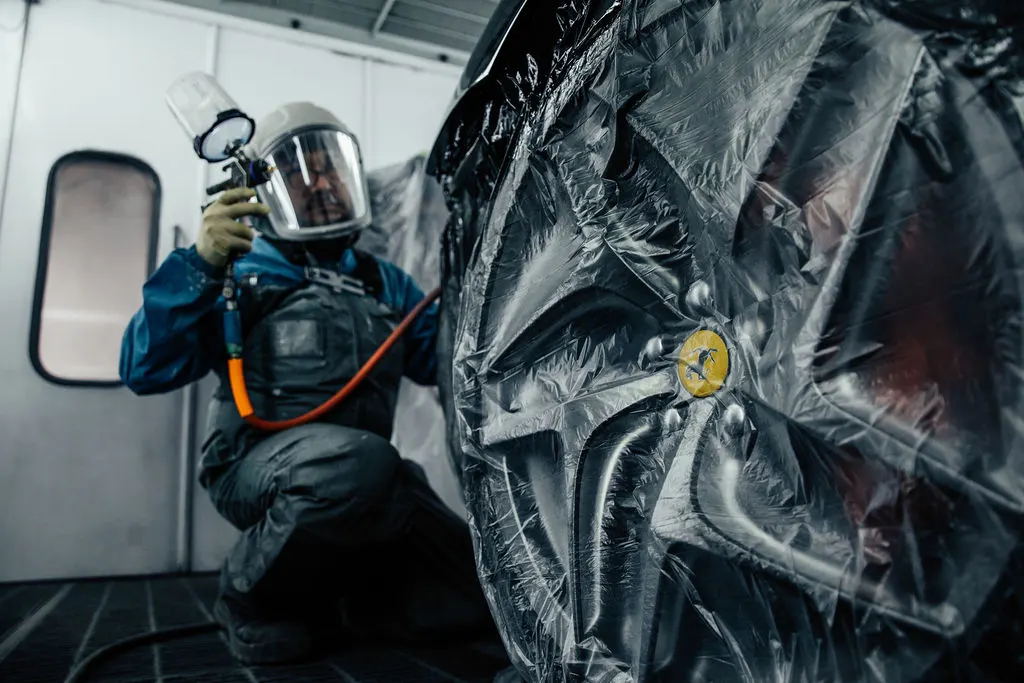
That’s why experienced Ferrari painters want the entire vehicle in the paint booth, where every adjustment can be checked against the surrounding panels under controlled lighting designed to replicate daylight.
Losing control over the final clear coat
The clear coat is just as important as the color underneath. Its thickness, gloss level, and even its texture all have to match the factory finish.
Ferrari paint isn’t perfectly smooth. Like every factory finish, it has a subtle surface texture that helps create a consistent appearance across every panel.
If an outside painter leaves the repaired panel perfectly flat while the rest of the vehicle retains its original texture, that repair becomes obvious. Keeping the vehicle under one roof allows the same team to control every stage of the process, including the final polishing and refinement needed to match the surrounding factory finish.
Why keeping the car in one facility matters
A Ferrari needs complete focus. You cannot break the repair process into pieces and hand them out to different people in different buildings. The person doing the body work needs to talk to the person doing the paint work. They need to work together as a single team.
Ensuring perfect panel alignment before painting
Proper panel fitment begins long before the first coat of paint is sprayed. Every door, fender, bumper, and body panel should be test-fitted first so the gaps, body lines, and alignment are exactly where they need to be.
When parts are painted at an outside facility before they’re fully fitted to the vehicle, technicians often have to make final adjustments during installation. Even small corrections can increase the risk of scratching fresh paint, chipping the edges of a new clear coat, or creating uneven panel gaps.
An experienced in-house team approaches the process differently. The vehicle is fully test-fitted first, allowing every panel to be adjusted before any paint is applied. Once everything fits precisely, the painting process begins with the complete vehicle under one roof. That attention to detail is a fundamental part of our paint repair and refinishing process, helping deliver the seamless fit, finish, and factory-quality appearance Ferrari owners expect.
Protecting your investment
A high-quality paint repair does more than restore your Ferrari’s appearance. It also helps protect its long-term value. Mismatched panels, inconsistent metallic finishes, or poorly applied clear coat can raise questions during resale, trade-in, or ownership inspections. That’s why every detail matters.
At Avio Coach Craft, every stage of the repair stays under one roof. We don’t send painted panels to outside vendors because maintaining complete control over the process is essential to achieving a factory-quality result. Our technicians spend the time needed to custom match your Ferrari’s aged factory paint, ensuring the repaired area blends as naturally as possible with the surrounding finish.
If your Ferrari has been damaged and you’re looking for a team that understands the level of craftsmanship these vehicles require, learn more about our Ferrari collision repair process. Call us at (310) 312-1128 to speak with our team.