

How to Choose an Auto Body Shop in Los Angeles for Luxury and High-End Electric Vehicles
Owning a luxury or high end electric vehicle in Los Angeles is one thing. Finding the right shop to repair it is another challenge entirely. With hundreds of collision centers spread across the city, it’s easy to assume any certified facility can handle your Tesla, Lucid, or Porsche, but that assumption can cost you far more than the repair itself.
Luxury EVs are engineered to tolerances that standard body shops simply aren’t built to meet. A misaligned sensor, an aftermarket panel, or an improperly handled battery pack can compromise your vehicle’s safety systems, and void your manufacturer warranty. In a city where these vehicles are as common as they are valuable, knowing exactly what to look for in a repair facility is essential.
Confirm Current OEM Certifications for Your Exact Brand

The first thing to check isn’t a shop’s Yelp rating. It’s whether they hold active, current certification from your vehicle’s manufacturer. Tesla Approved and Lucid Certified aren’t just marketing badges. They represent rigorous training requirements, mandatory tooling investments, and ongoing compliance audits that most shops never qualify for or bother to maintain.
The keyword is “current”. Some shops display certifications that have lapsed, relying on owners not to notice. Always cross reference by checking your manufacturer’s official certified shop locator directly. I-CAR Gold Class and ASE certification are worth having, but they’re baseline credentials. They indicate general competency, not brand specific expertise. For a vehicle like a Lucid Air or a Tesla Model S, you need both.
Verify Dedicated EV Infrastructure for Repair Bays
A shop that repairs Hondas and Teslas out of the same bay is not equipped for your vehicle. High end EVs require physical infrastructure that most general collision centers never invest in, and it’s entirely reasonable to ask about this directly before committing.
What you’re looking for: isolated aluminum repair bays that prevent cross-contamination with steel, dedicated battery handling tables, high voltage isolation tools, insulated equipment for safe battery disconnection and reconnection, and frame benches specifically calibrated for aluminum unibody construction. They’re prerequisites for a repair that meets factory standards. Tooling investments for shops certified to work on vehicles like the Lucid Air can exceed $200,000, which is precisely why so few facilities qualify. When evaluating your options, asking about physical infrastructure is one of the most direct ways to separate genuine specialists from shops that simply claim to be.
Demand Full In-House ADAS Recalibration Capabilities
This is the step most vehicle owners don’t think to ask about, and it’s one of the most consequential. Modern luxury EVs are built around dense networks of cameras, radar, lidar, and ultrasonic sensors that power adaptive cruise control, automatic emergency braking, lane departure warnings, and driver assistance systems. A collision can knock any of these out of alignment, even in a minor impact.
Recalibrating these systems requires proprietary software and brand specific tools. Tesla repairs require access to the Tesla Toolbox; Lucid’s DreamDrive system involves 32 sensors that must each be verified after every repair. If a shop outsources this calibration to a third party, they’re introducing an uncontrolled variable into a safety critical process. Ask explicitly: is ADAS recalibration performed in-house, by your own technicians, using manufacturer approved software? If the answer is vague, that’s your answer. This matters beyond collision work too. Even windshield and glass repairs on luxury EVs often require full ADAS recalibration afterward, since forward-facing cameras are typically mounted to the glass itself.
Make Sure OEM Parts Are Used Every Time
Aftermarket parts are cheaper, which is exactly why insurers prefer them and why their use should concern you. On a standard commuter vehicle, an aftermarket bumper cover might be acceptable. On a luxury EV, it’s a different matter entirely.
OEM components are engineered to exact tolerances for your specific model. They ensure proper sensor mounting positions, correct panel gaps, seamless software integration, and finishes that match the vehicle’s original materials. Aftermarket alternatives frequently fall short on all of these, and some can interfere with your vehicle’s electronic systems. More critically, using non-OEM parts can void your manufacturer warranty. Before any work begins, get confirmation that the shop will use genuine manufacturer parts throughout the collision repair process. A reputable shop won’t hesitate to provide this.
Look for Proven Experience With Your Vehicle’s Specific Build
General luxury experience is not the same as model specific expertise. Repairing a carbon fiber body panel on a performance EV is a different discipline from working with steel. Bonding and replacing aluminum panels requires techniques and materials that technicians must be specifically trained in. Multi layer paint systems common on vehicles like Porsche and Bentley demand advanced color matching technology and climate controlled spray booths to replicate factory finishes accurately.
If your vehicle is a Tesla, check the shop’s rating in the Tesla Collision Support App, where owners can review certified facilities directly. Look for reviews that mention your specific model, not just general praise. A shop with a long track record on European exotics may still be on a learning curve with high voltage EV platforms, and vice versa.
Choose a Shop That Will Fight Your Insurance Battle for You
California law gives you the right to choose your own repair facility. Your insurance company cannot legally force you into a shop from their network. This matters because shops that insurers steer you toward are often selected for cost efficiency, not repair quality, and they are more likely to approve aftermarket parts and skip steps like full ADAS recalibration.
The right shop will advocate on your behalf: negotiating directly with adjusters to approve OEM parts, and submitting supplemental claims when additional damage is discovered during teardown. This takes work, and not every shop is willing to do it. Those that are will tell you upfront that they handle insurance coordination directly. If a shop can’t explain how they handle pushback from insurers on OEM parts, that’s worth noting before you commit.
Know the Damage Risks Specific to LA’s Roads and Environment
Los Angeles creates a particular set of hazards for luxury EV owners that other cities don’t replicate at the same scale. The 405, 10, and 101 freeways are among the highest traffic corridors in the country, making rear end collisions a consistent risk. Tight parking structures in Brentwood, Century City, and Culver City produce a steady stream of door dings, scrapes, and sensor misalignments from low speed contact.
Coastal neighborhoods introduce their own threat. Salt air from the Pacific accelerates corrosion on aluminum panels that haven’t been properly sealed or repaired with the right materials. This is especially relevant for owners in Santa Monica. And anyone who has navigated the steep driveways of the Hollywood Hills or Bel Air knows the risk of underbody scrapes, which on an EV can mean contact with the battery casing itself. Understanding these local risk patterns helps clarify what kind of expertise your shop actually needs to have.
Ask These Questions Before You Hand Over Your Keys
Before authorizing any repair, run through these questions with the shop directly. If you’re driving a Ferrari, understanding what separates a Ferrari qualified repair process from a standard body shop can make these conversations much easier.
- Is your OEM certification for my specific brand current?
- Do you perform ADAS recalibration inhouse?
- Will you use OEM parts exclusively?
- What does your repair warranty cover, and for how long?
- Will you handle communication with my insurance company directly?
- What is a realistic turnaround time, accounting for parts availability and calibration?
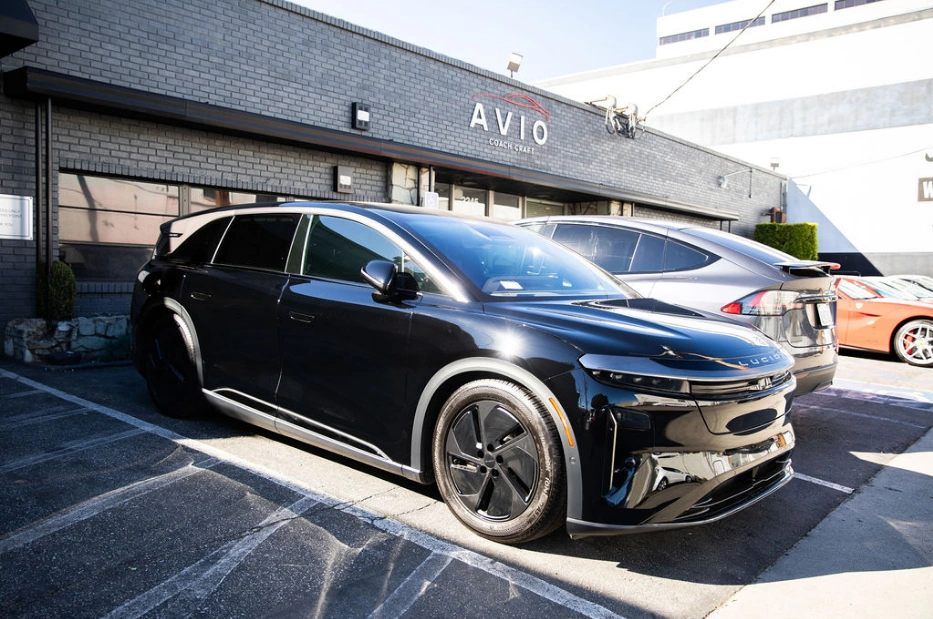
A shop that answers these confidently and clearly operates at the standard your vehicle was built to. One that hedges, deflects, or can’t answer has already told you what you need to know. If you’re in Los Angeles and looking for a starting point, Avio Coach Craft has been repairing luxury and exotic vehicles since 1989, holds active Tesla Approved and Lucid Certified status, and performs full ADAS recalibration in-house.