

OEM Tesla Parts & Repair Standards in Los Angeles
OEM Tesla parts and factory repair standards are essential to restoring safety, performance, and long-term reliability, especially for Teslas repaired in Los Angeles, where low-speed impacts often affect sensors, mounts, and aluminum panels. Using non-OEM parts or skipping Tesla-required procedures may reduce upfront cost, but it increases the risk of calibration errors, compromised crash performance, and system issues over time.
Tesla repairs aren’t just bodywork, they’re system restorations. Where you repair your Tesla matters.
At Avio Coach Craft, a Tesla Approved Body Shop in West Los Angeles, OEM parts and Tesla repair standards aren’t optional upgrades. They’re the baseline.
What OEM Tesla Parts Really Mean

OEM stands for Original Equipment Manufacturer – parts designed, tested, and supplied by Tesla specifically for your vehicle. These components are engineered to work with Tesla’s software, diagnostics, and safety systems at exact factory tolerances.
OEM Tesla parts are designed to:
-
TMatch factory specifications for fit, material, and strength
-
Integrate precisely with cameras, sensors, and vehicle software
-
Preserve crash performance and energy absorption
-
Support accurate calibration and long-term reliability
Aftermarket parts may look similar, but even small differences in material composition or mounting precision can have outsized effects on Tesla safety systems.
Tesla Repair Standards vs Traditional Auto Body Repairs
Tesla repair standards differ fundamentally from conventional auto body repairs. Traditional vehicles often allow flexibility in parts sourcing and methods; Teslas do not. Their aluminum-intensive construction, integrated ADAS hardware, and high-voltage safety requirements demand specialized tools, training, and documentation.
Tesla also mandates specific procedures, from teardown to calibration and verification, to ensure the vehicle behaves exactly as engineered. These standards exist to protect safety and performance, not to inflate repair costs.
Why Tesla Requires OEM Parts for Many Repairs
Tesla mandates OEM parts for many repairs because safety systems rely on exact geometry and material behavior. Even minor deviations can affect how sensors interpret their surroundings or how panels manage impact energy.
OEM requirements help ensure sensor accuracy, proper software communication during diagnostics, predictable crash performance, and long-term system stability. In practice, OEM parts reduce the risk of recurring alerts, misalignment, or hidden safety compromises after a repair.
Tesla Approved Body Shop Standards (What Certification Actually Requires)
Being Tesla Approved means more than experience. It requires ongoing compliance with Tesla’s repair ecosystem.
Certification standards include:
-
Tesla-approved tools, equipment, and repair benches
-
Factory training with recurring re-certification
-
Mandatory use of Tesla repair procedures
-
OEM-only parts sourcing through Tesla channels
-
Calibration, validation, and documented verification steps
This is what separates Tesla-approved repairs from shops that simply “work on Teslas.”
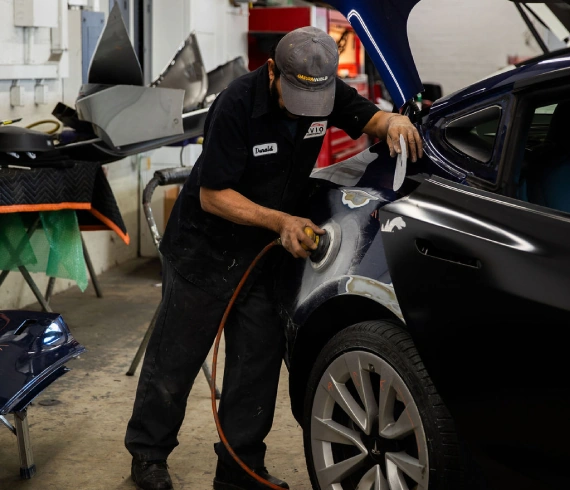
OEM Tesla Parts and Repair Timelines
Repair timelines depend on what’s damaged, not just what’s visible.
Cosmetic OEM repairs typically take one to three business days, allowing time for refinishing, curing, and quality checks. Structural or sensor-related repairs often require five to seven business days due to teardown, component replacement or repositioning, calibration, and verification. Full OEM bumper or panel replacements may take seven to ten business days, accounting for parts logistics, paint preparation, sensor transfer, calibration, and final inspection.
Los Angeles benefits from regional Tesla parts availability, but correct sequencing – inspection, ordering, repair, and validation still takes time when done properly.
How OEM Tesla Repairs Protect Vehicle Safety & Technology Long-Term
OEM repairs protect more than appearance. They safeguard the systems your Tesla relies on every time you drive. Factory-spec parts and procedures ensure cameras and sensors remain correctly aligned, braking and collision-avoidance systems behave predictably, and software diagnostics communicate accurately with hardware components.
When non-OEM parts or shortcuts are used, small inaccuracies can compound over time. A Tesla may “drive fine” initially, but gradual sensor drift, inconsistent alerts, or degraded safety performance can surface months later. OEM repairs are about preventing those long-tail risks before they start.
OEM Tesla Repairs, Vehicle Value & Ownership Confidence
OEM repairs also protect your Tesla’s long-term value and ownership confidence. Proper documentation, calibration records, and factory-approved procedures provide assurance that the vehicle was restored correctly after damage.
For resale, trade-in, or long-term ownership, OEM-compliant repairs reduce red flags and uncertainty. More importantly, they provide peace of mind, knowing your Tesla wasn’t just made to look right, but was restored to operate the way Tesla intended.
Common Myths About OEM Tesla Repairs
One common myth is that aftermarket parts are “basically the same.” In reality, even slight differences in thickness, mounting points, or material behavior can affect calibration and safety systems.
Another myth is that calibration only matters if warning lights appear. Many misalignments don’t trigger alerts but still reduce system accuracy. What matters is strict adherence to Tesla’s repair procedures, OEM parts, and documented verification – every time.
Risks of Non-OEM Tesla Repairs
Non-OEM repairs may lower upfront cost, but they introduce real long-term risks. These can include gradual sensor drift, intermittent system warnings, incomplete calibrations, compromised crash performance, and reduced confidence in driver-assistance systems. Many of these issues surface weeks or months later, making them harder and more expensive to correct.
Feature Comparison: OEM vs Aftermarket Repairs
| Feature | OEM / Tesla Approved Standard (Avio Coach Craft) | Generic / Aftermarket Repair |
|---|---|---|
| Fit & Finish | Exact factory tolerances (micrometer precision) | “Visual match” only; gaps may vary |
| Sensor Function | Materials tested for radar/sensor transparency | Material thickness may block/confuse sensors |
| Crash Safety | Predictable energy absorption (crumple zones work) | Unknown metal composition; may fold incorrectly |
| Long-Term Tech | Calibrated to factory spec; software updates safe | Risk of “Sensor Drift” or phantom braking alerts |
| Resale Value | Documented OEM restoration; preserves value | “Accident history” with non-verified parts |
How to Confirm Your Tesla Is Being Repaired to OEM Standards
Before approving a repair, ask your shop:
-
Are OEM Tesla parts being used?
-
Is the facility Tesla Approved?
-
Will calibration be performed and documented?
-
Are Tesla repair procedures being followed—not insurance shortcuts?
-
Will final verification be completed before delivery?
Clear answers here protect your Tesla long after the repair is finished.
Why Los Angeles Tesla Owners Choose Avio Coach Craft
Los Angeles Tesla owners choose Avio Coach Craft because we’re a Tesla Approved Body Shop that follows OEM repair standards without compromise. We restore Model 3, Model Y, Model S, and Model X vehicles using factory procedures, OEM parts, and documented calibration.
Our West LA location means realistic timelines, local parts access, and deep familiarity with common Tesla damage patterns, paired with clear communication and a craft-first approach.
FAQs: OEM Tesla Parts & Repair Standards
Are OEM Tesla parts required for all repairs?
Yes. Tesla repair standards require OEM parts for most repairs, especially those involving structure, sensors, cameras, or safety systems. Even cosmetic damage can trigger OEM requirements once components are inspected.
Does insurance have to approve OEM Tesla parts?
Tesla repair standards still apply regardless of insurance preferences. Approved repairs must follow Tesla procedures and OEM part requirements to restore safety and system integrity.
Are aftermarket Tesla parts cheaper?
Sometimes, but they often lack proper fit, calibration compatibility, and long-term durability. Small differences can affect sensor accuracy and overall vehicle performance.
How can I verify my repair followed Tesla standards?
Ask for documentation confirming OEM parts usage, completed calibrations, and final verification. A Tesla Approved Body Shop should provide this without hesitation.