

What to fix and what to ignore before your 2023 Tesla Model Y lease return in Los Angeles
If your 2023 Model Y lease is winding down, the return inspection is probably the part you are dreading most. Tesla’s self-inspection process is quick, but the bill that follows can catch owners off guard, especially in a city like Los Angeles.
The good news is that most of what shows up on your Model Y after three years does not actually count against you.
The trick is knowing which marks are normal and which ones will show up as a charge.
How the Tesla lease return inspection actually works

Tesla handles lease returns through the app rather than an in-person walkaround with an agent. You will be asked to take a set of exterior photos, several shots of each tire and its tread depth, and a few interior photos. Tesla then reviews the images against its wear and use guidelines and generates an estimate before you ever hand back the keys.
The part most owners miss is timing. Because the inspection happens through photos you submit, you have a window to make repairs first and submit clean images afterward. Waiting until the week your lease ends removes that option. Starting the self-inspection three to four weeks early gives you time to see what gets flagged and decide what is worth fixing.
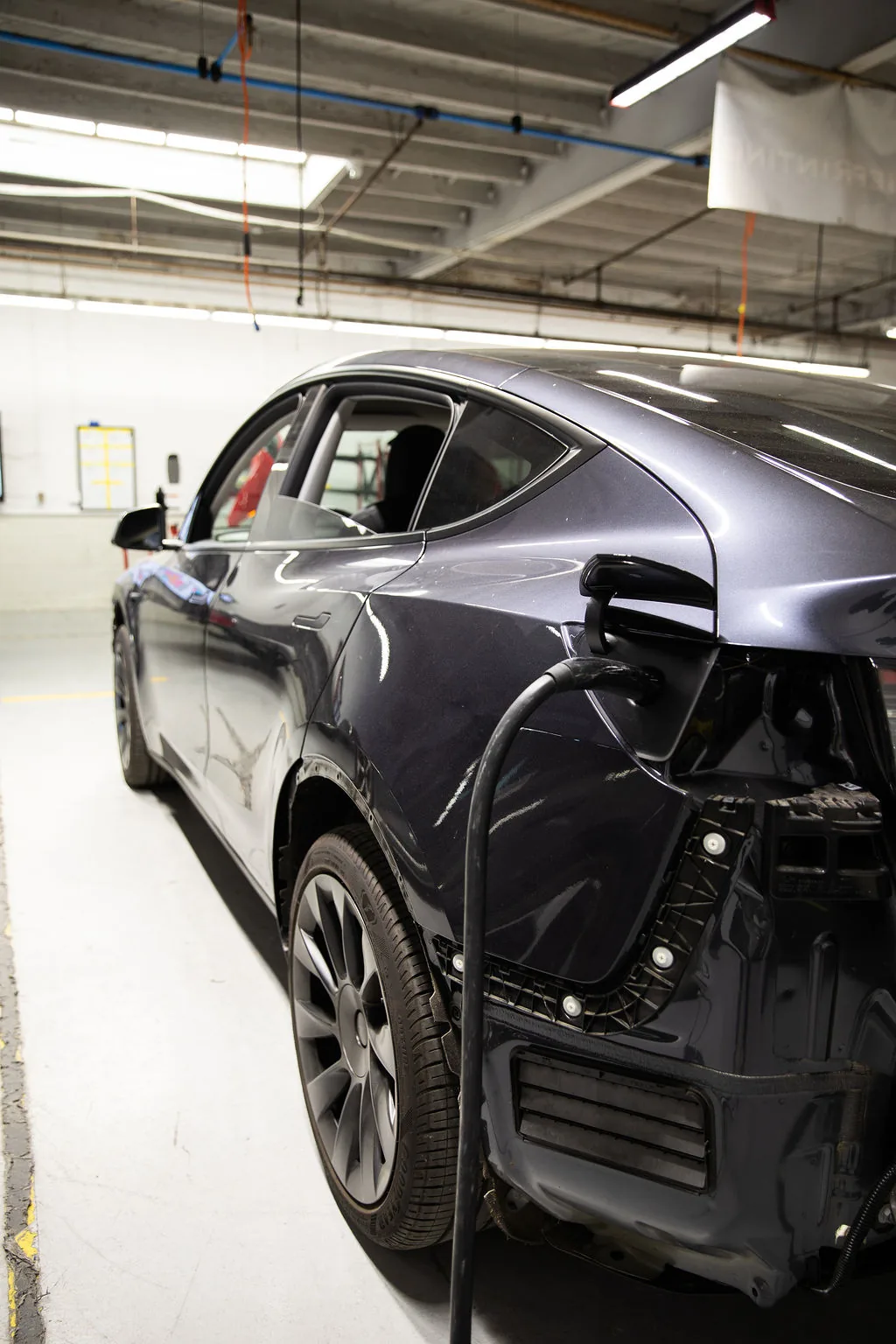
What you should fix before returning a 2023 Tesla Model Y
Some issues are worth handling before your inspection because Tesla almost always charges for them and a local repair is usually cheaper than the fee.
Significant curb rash and wheel damage
Curb rash on wheels is one of the most common charges for Los Angeles drivers. Deep gouges, bent rims, or scrapes that go past the clear coat into bare metal will get flagged.
Cracked or chipped windshield and glass
Any crack in the windshield, no matter how small, tends to get charged, and chips near the edge of the glass can spread quickly on LA freeways where temperature swings are common. Replacing or repairing windshields and glass damage ahead of time avoids a line item that Tesla treats as safety related rather than cosmetic.
Dents and noticeable body damage
Dents larger than about the size of a golf ball, especially on doors, fenders, and quarter panels, are treated as damage rather than wear. Anything that pushes the metal enough to disturb the paint surface is worth having looked at before your photos go in.
Deep scratches and paint damage
Scratches that expose primer or bare metal, along with cracked or chipped bumpers, are among the most common paint repair charges. Once a scratch is deep enough to see a different color underneath, it stops being cosmetic wear in Tesla’s eyes.
Torn, stained, or damaged interior materials
Burns, tears, and stains in the upholstery, cracked screens, and missing charging cables or accessories all show up as charges. Cosmetic fading is treated differently from actual damage. Many small issues are worth handling yourself before the inspection: a leather repair kit can fill light tears or scuffs, an upholstery cleaner made for automotive interiors can lift most stains if treated soon after they happen, and a screen protector or gentle polish can reduce the appearance of a scratched display. Missing cables or accessories can usually be reordered directly.
Poor previous body repairs
If a prior owner or a past repair left mismatched paint, uneven panel gaps, or visible bondo, Tesla’s inspection will usually catch it even if you were not the one who caused the original damage. It is also worth confirming that ADAS calibration was done correctly after any prior collision repair. A misaligned camera or sensor from a rushed repair job can affect Autopilot performance and, in some cases, get flagged during inspection alongside the bodywork itself.
What you can usually ignore before your Tesla lease return
Tesla’s own guidelines allow for a fair amount of cosmetic wear that comes from normal driving, and trying to fix every mark on the car is usually wasted money.
Minor rock chips
Small paint chips along the front bumper and hood are expected on a three year old car, especially one that has spent real time on the freeway. As long as they are scattered rather than concentrated in one spot, they rarely trigger a charge.
Small door dings and light scratches
Minor dents under about the size of a golf ball are typically acceptable as long as there are not too many on a single panel and the paint itself is not broken. Light scratches that do not go through the clear coat into the primer are usually considered normal too.
Light interior wear and trim fading
Faded or lightly worn interior trim, minor scuffs on door sills from getting in and out, and light wear on the driver’s seat bolster are all part of everyday use.
If your Model Y looks like a normal daily driver rather than a car that was in an accident or heavily neglected, a good portion of what you see is probably fine to leave alone.
The repair math Tesla won’t show you
This is the part most lease return guides skip entirely. Tesla’s wear and use charges are set by Tesla, not by what it actually costs to fix the damage. In a lot of cases, having an independent, Tesla approved body shop repair the item before your inspection costs noticeably less than the flat charge Tesla applies at return.
A curbed wheel that Tesla might charge a few hundred dollars for can often be refinished for less at a specialty shop, especially if it is caught before the damage worsens. A scuffed or cracked bumper can often be repaired or refinished in a single visit rather than a full replacement, which frequently comes in well under what Tesla charges for the same damage at return.
A practical pre-return timeline for Los Angeles drivers
Start your self inspection about a month before your lease ends. Once you see the initial estimate, make a list of anything flagged for body damage, wheels, or tires. Before accepting Tesla’s number, get a quote from a local Tesla body shop that is certified to work on Model Y repairs. Los Angeles has several Tesla approved options within a short drive of most neighborhoods. Shops like Avio Coach Craft, centrally located in West Los Angeles, which has repaired Teslas since the brand’s early days in the city, can usually tell you within minutes whether an item is worth fixing before your inspection.
Avio Coach Craft works on Model Y and Model 3 panels every day. They only use OEM parts and already know Tesla’s specific factory color-match formulations and aluminum repair requirements, so there is no back-and-forth figuring out compatibility. Many repairs can be quoted and scheduled the same week, and smaller jobs like wheel refinishing or bumper touch-ups are often finished in a single visit. Compare the repair cost against Tesla’s charge for the same item. If the repair is cheaper, get it done and photograph the finished work. If Tesla’s charge is actually lower than a proper repair would cost, it may make more sense to just pay it.
Avio Coach Craft provides expert Tesla collision and cosmetic repair in Los Angeles without ever cutting corners. Call us at (310) 312-1128 to speak with our team.